
Anúncios
Economic integration across Asia and Africa represents one of the most promising yet underexplored opportunities for global development and prosperity in the 21st century.

As two continents home to over 6 billion people combined, Asia and Africa possess complementary resources, demographics, and economic structures that could unlock unprecedented growth. While Europe has demonstrated the benefits of regional integration through the European Union, and North America through NAFTA (now USMCA), Asia and Africa remain relatively fragmented economically despite growing intra-regional trade initiatives.
Anúncios
The potential for economic integration between these two massive continents extends beyond traditional trade agreements. It encompasses infrastructure development, technology transfer, investment flows, labor mobility, and policy harmonization that could reshape the global economic landscape. Understanding this potential requires examining current initiatives, identifying obstacles, and envisioning pathways toward deeper cooperation.
🌏 The Current State of Economic Integration in Asia
Asia has made significant strides toward economic integration over the past three decades, though progress remains uneven across different sub-regions. The Association of Southeast Asian Nations (ASEAN) stands as the most successful example, creating a market of over 650 million people with increasingly harmonized trade policies and reduced tariff barriers.
Anúncios
The Regional Comprehensive Economic Partnership (RCEP), which came into force in 2022, represents the world’s largest free trade agreement by GDP. It includes the ten ASEAN nations plus China, Japan, South Korea, Australia, and New Zealand. This agreement covers approximately 30% of global GDP and population, marking a historic milestone for Asian economic integration.
South Asia has the South Asian Association for Regional Cooperation (SAARC), though political tensions have limited its effectiveness. The Bay of Bengal Initiative for Multi-Sectoral Technical and Economic Cooperation (BIMSTEC) offers an alternative framework connecting South and Southeast Asia with growing potential for trade facilitation.
Central Asian republics have pursued integration through the Eurasian Economic Union, while the Gulf Cooperation Council (GCC) has advanced economic coordination among Arab states in Western Asia. Despite these initiatives, Asia still faces challenges including diverse political systems, varying development levels, and historical tensions that complicate deeper integration.
🌍 Africa’s Journey Toward Continental Integration
Africa has embarked on an ambitious integration agenda culminating in the African Continental Free Trade Area (AfCFTA), which became operational in 2021. This agreement creates the world’s largest free trade area by number of countries, encompassing 54 of the 55 African Union member states.
The AfCFTA aims to eliminate tariffs on 90% of goods, facilitate service trade, and create a continental customs union. If fully implemented, it could boost intra-African trade by over 50% and increase African exports by $560 billion, according to World Bank estimates.
Regional economic communities (RECs) serve as building blocks for continental integration. These include:
- The East African Community (EAC) with its customs union and common market
- The Economic Community of West African States (ECOWAS) with plans for a common currency
- The Southern African Development Community (SADC) focusing on infrastructure and investment
- The Common Market for Eastern and Southern Africa (COMESA) facilitating trade among 21 member states
Despite these frameworks, intra-African trade still accounts for only about 15-18% of total African trade, compared to over 60% in Europe and 50% in Asia. Infrastructure deficits, non-tariff barriers, and limited production diversification continue to hamper integration efforts.
💼 Complementary Economic Structures: The Integration Advantage
The economic structures of Asia and Africa demonstrate remarkable complementarity that could drive mutually beneficial integration. Asia, particularly East and Southeast Asia, has developed strong manufacturing capabilities, advanced technology sectors, and substantial capital reserves. Meanwhile, Africa possesses abundant natural resources, a young and growing workforce, and vast untapped consumer markets.
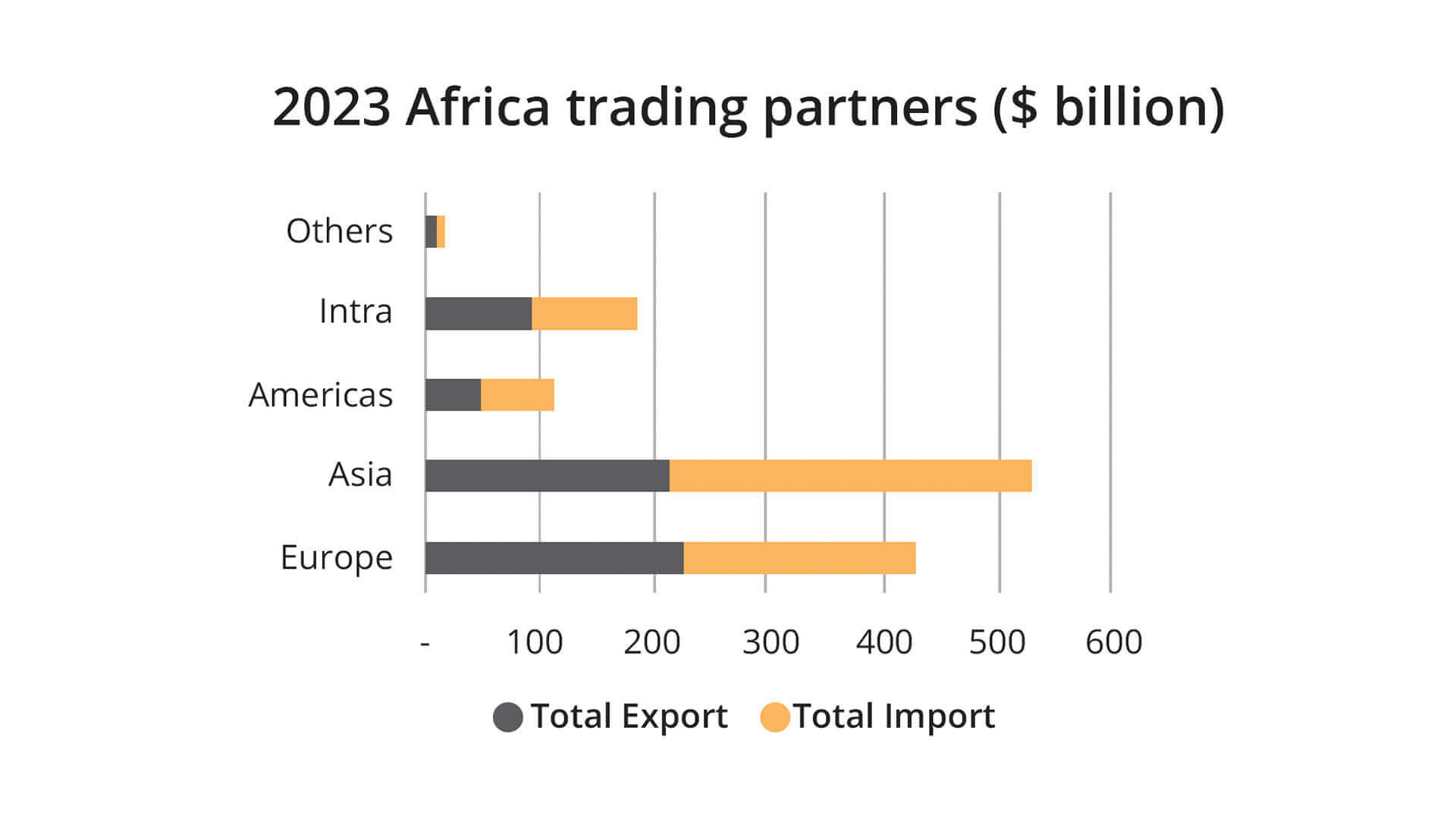
China has emerged as Africa’s largest trading partner, with bilateral trade reaching approximately $254 billion in 2021. The Belt and Road Initiative (BRI) has channeled billions of dollars into African infrastructure projects, connecting ports, railways, and energy systems that facilitate trade flows.
India has also strengthened economic ties with Africa through the India-Africa Forum Summit and initiatives like the Pan-African e-Network Project. Japanese and South Korean companies have increased investments in African manufacturing, particularly in automotive and electronics sectors.
This complementarity extends to specific sectors. Asian expertise in agricultural technology could boost African food production, while African mineral resources support Asian manufacturing supply chains. Asian pharmaceutical companies could leverage African markets while improving healthcare access, creating win-win scenarios for both continents.
🚧 Infrastructure: The Foundation for Integration
Infrastructure development represents both the greatest obstacle and the most critical enabler of Asia-Africa economic integration. The infrastructure gap in Africa alone is estimated at $68-$108 billion annually, while Asia requires approximately $1.7 trillion in infrastructure investment per year to maintain growth momentum.
Transport connectivity remains particularly challenging. Shipping goods between African countries often proves more expensive and time-consuming than shipping to Europe or Asia. Similarly, air connectivity between the two continents remains limited, with many routes requiring stopovers in Middle Eastern or European hubs.
Digital infrastructure presents both challenges and opportunities. While Africa lags in broadband penetration and digital payments systems, mobile technology adoption has been rapid. Asia’s experience with digital economy development, from e-commerce platforms to fintech innovations, could accelerate African digital transformation.
Energy infrastructure requires urgent attention. Africa’s electricity access deficit affects over 600 million people, while Asia faces growing energy demand. Collaboration on renewable energy projects, particularly solar and wind power, could address both continents’ needs while supporting climate goals.
📊 Investment Flows and Financial Integration
Foreign direct investment (FDI) flows between Asia and Africa have grown significantly but remain below potential. Asian FDI to Africa reached approximately $70 billion cumulatively by 2020, with China accounting for the majority, followed by India, Malaysia, and Singapore.
Financial integration could deepen these investment relationships. Establishing payment systems that facilitate transactions in local currencies would reduce exchange rate risks and transaction costs. The Asian Infrastructure Investment Bank (AIIB) and New Development Bank (NDB) have begun financing African projects, creating institutional frameworks for sustained investment flows.
Portfolio investment and capital market integration present additional opportunities. African stock exchanges could attract Asian institutional investors seeking diversification, while African sovereign wealth funds could invest in Asian growth sectors. However, regulatory harmonization and risk management frameworks need strengthening to facilitate these flows.
🎓 Human Capital and Technology Transfer
Human capital development and technology transfer constitute critical dimensions of sustainable economic integration. Asian universities have increasingly welcomed African students, with China alone hosting over 80,000 African students annually. These educational exchanges build networks and understanding that facilitate long-term economic cooperation.
Technology transfer agreements could accelerate African industrialization while creating markets for Asian technology providers. Manufacturing technologies, agricultural innovations, and digital solutions developed in Asia could be adapted for African contexts, supporting value addition and economic transformation.
Skills development partnerships offer another avenue for integration. Asian countries that have successfully transitioned from agricultural to industrial economies possess valuable experience and methodologies. Technical and vocational training programs could prepare African workforces for emerging industries while addressing Asian companies’ need for skilled labor in African operations.
🌾 Agricultural Cooperation and Food Security
Agriculture represents a sector with enormous potential for Asia-Africa integration. Both continents face food security challenges despite having vast agricultural potential. Asia has developed advanced agricultural technologies including high-yield crop varieties, precision farming techniques, and post-harvest management systems.
Africa possesses 60% of the world’s uncultivated arable land but imports approximately $35 billion in food annually. Transferring Asian agricultural technology and expertise to Africa could dramatically increase productivity while reducing Asian countries’ concerns about food security.
Agribusiness investments from Asia have already begun transforming African agriculture. Rice cultivation projects, horticulture investments, and aquaculture ventures demonstrate the potential for mutually beneficial cooperation. Expanding these initiatives while ensuring environmental sustainability and local benefit could create significant value for both continents.
⚡ Manufacturing and Industrialization Partnerships
Manufacturing cooperation between Asia and Africa could accelerate African industrialization while helping Asian companies manage rising labor costs and diversify supply chains. The establishment of special economic zones (SEZs) and industrial parks across Africa by Chinese, Indian, and other Asian investors has created manufacturing hubs that attract further investment.
Textile and garment manufacturing has led this trend, with several African countries emerging as production bases for Asian brands. The experience gained through the Multi-Fibre Arrangement and African Growth and Opportunity Act (AGOA) has demonstrated African manufacturing potential.
Automotive manufacturing represents another growth area. Asian automotive companies have established assembly plants in South Africa, Morocco, Nigeria, and other African countries, creating local jobs while accessing regional markets. Expanding these investments and developing local supplier networks could deepen integration while building African manufacturing capabilities.
🔄 Challenges and Obstacles to Integration
Despite the compelling potential, numerous challenges complicate Asia-Africa economic integration. Political instability in several regions creates uncertainty that discourages investment and disrupts trade flows. Governance issues, including corruption and weak regulatory frameworks, increase business costs and risks.
Currency volatility and foreign exchange restrictions limit trade and investment. Many African currencies remain inconvertible or subject to capital controls, complicating transactions and increasing hedging costs for Asian businesses.
Regulatory differences and lack of standardization create obstacles for businesses operating across multiple countries. Varying product standards, licensing requirements, and business registration processes increase compliance costs and complexity.
Debt sustainability concerns have emerged as several African countries struggle with debt serviced to Asian creditors, particularly China. Ensuring that integration and investment flows support long-term sustainability rather than creating dependency requires careful management and transparent frameworks.
🌱 Environmental Sustainability and Green Integration
Economic integration between Asia and Africa must address environmental sustainability to ensure long-term viability. Both continents face significant climate vulnerabilities, and unsustainable development patterns could exacerbate these challenges.
Green technology transfer from Asia could support African development while minimizing environmental impact. Solar panel manufacturing, electric vehicle technology, and green building materials developed in Asia could leapfrog Africa past carbon-intensive development paths.
Conservation and biodiversity protection require integration into economic planning. African wildlife and ecosystems provide global benefits that should be valued in economic frameworks. Asian expertise in balancing development with environmental protection, though imperfect, offers lessons for collaborative approaches.
🚀 Future Pathways and Strategic Recommendations
Realizing the full potential of Asia-Africa economic integration requires strategic actions across multiple dimensions. Governments must prioritize policy harmonization, reducing bureaucratic barriers and creating predictable regulatory environments that encourage cross-continental business.
Infrastructure investment must accelerate with improved coordination between Asian financing institutions and African development priorities. Multilateral development banks should expand their role in facilitating bankable infrastructure projects that connect economic centers across both continents.
Private sector engagement needs strengthening through platforms that connect Asian and African businesses, particularly small and medium enterprises. Trade missions, investment forums, and digital platforms can facilitate partnerships that might not emerge through government-to-government channels alone.
Educational and cultural exchanges should expand to build mutual understanding and long-term relationships. Youth exchanges, professional training programs, and collaborative research initiatives can create networks that sustain economic integration over decades.
💡 The Digital Economy as an Integration Accelerator
Digital economy development presents unique opportunities for Asia-Africa integration that bypass some traditional infrastructure constraints. E-commerce platforms can connect African producers directly with Asian consumers, while digital payment systems facilitate transactions without requiring complex banking infrastructure.
African entrepreneurs have demonstrated remarkable innovation in mobile money, demonstrating that both continents can contribute solutions rather than following a one-way technology transfer model. Collaborative innovation in fintech, agritech, and healthtech could create globally competitive solutions while addressing local challenges.
Data governance and digital infrastructure standards require attention as digital integration advances. Establishing frameworks that protect privacy while facilitating data flows will enable emerging technologies like artificial intelligence and Internet of Things applications to support integration.
🤝 Building Inclusive and Equitable Integration
Economic integration must benefit broad populations rather than narrow elites to achieve political sustainability and social acceptance. Ensuring that integration creates jobs, improves living standards, and builds local capabilities requires intentional policy design and implementation.
Women and youth should be prioritized in integration initiatives, given their disproportionate representation in informal economies and their potential as economic drivers. Programs that support women entrepreneurs, provide youth training, and create inclusive supply chains will strengthen integration outcomes.
Local content requirements and technology transfer provisions in investment agreements can ensure that integration builds long-term capabilities rather than creating dependency. Balancing investor protection with development objectives requires sophisticated policy frameworks and strong negotiating capacity.
The journey toward deeper economic integration between Asia and Africa has already begun, driven by market forces, government initiatives, and growing recognition of mutual interests. While challenges remain substantial, the potential benefits justify sustained effort and creative problem-solving. As global economic power continues shifting toward these continents, their ability to work together will significantly influence both regional prosperity and global economic dynamics.
Success will require patience, flexibility, and commitment from governments, businesses, and civil society across both continents. The integration process will be gradual, uneven, and occasionally frustrating, but the alternative of continued fragmentation carries even greater costs. By building on existing initiatives, learning from both successes and failures, and maintaining focus on inclusive, sustainable development, Asia and Africa can create an integrated economic space that serves billions of people while reshaping the global economy for the better.
