
Anúncios
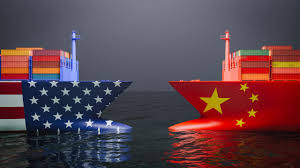
Trade wars have evolved from isolated policy decisions into powerful economic forces reshaping global commerce, supply chains, and industrial landscapes across continents.

🌍 Understanding the Modern Trade War Phenomenon
The contemporary trade war landscape represents far more than simple tariff exchanges between nations. It embodies a complex web of economic strategies, political maneuvering, and industrial repositioning that reverberates through every sector of the global economy. What began as bilateral tensions has transformed into a multifaceted challenge affecting manufacturers, consumers, investors, and policymakers worldwide.
Anúncios
Trade wars typically emerge when countries impose tariffs, quotas, or other trade barriers to protect domestic industries or respond to perceived unfair practices. However, the ripple effects extend far beyond the initial combatants, creating waves that disrupt established supply chains, alter investment patterns, and force businesses to reconsider fundamental operational strategies.
📊 The Immediate Economic Shockwaves
When major economies engage in trade conflicts, the immediate consequences manifest across multiple economic indicators. Currency valuations fluctuate dramatically as markets react to policy announcements. Stock exchanges experience volatility as investors reassess company valuations based on exposure to affected markets and supply chains.
Anúncios
Manufacturing sectors feel the impact first and most acutely. Companies that relied on established international supply chains suddenly face increased costs for raw materials, components, and finished goods. These additional expenses create difficult choices: absorb the costs and reduce profit margins, pass them to consumers through higher prices, or fundamentally restructure operations.
Price Inflation and Consumer Impact
Consumers ultimately bear significant portions of trade war costs through higher prices on everyday goods. Electronics, clothing, automotive products, and household items all see price increases when tariffs affect production costs. This inflation pressure particularly impacts middle and lower-income households, where discretionary spending represents a smaller portion of total budgets.
The psychological impact on consumer confidence also creates economic headwinds. Uncertainty about future price levels and economic stability can reduce major purchases, affecting industries from real estate to automobiles, creating secondary economic contractions beyond the direct tariff effects.
🏭 Industrial Transformation and Supply Chain Revolution
Perhaps nowhere is the ripple effect more visible than in global supply chain reconfiguration. Decades of optimization based on cost efficiency, proximity to markets, and specialization suddenly became liabilities when trade barriers emerged. Companies initiated massive strategic reviews of their manufacturing footprints and sourcing strategies.
The “China Plus One” strategy gained prominence as businesses sought to diversify manufacturing beyond single-country concentration. Vietnam, Thailand, India, Mexico, and various Eastern European nations attracted new manufacturing investments as companies hedged against future trade disruptions.
Technology Sector Disruption
The technology industry faces particularly acute challenges from trade tensions. Semiconductor manufacturing, consumer electronics production, and telecommunications infrastructure all depend on intricate international supply chains involving multiple countries. Trade restrictions on specific technologies or companies create cascading effects throughout the sector.
Companies invested billions in redundant production capacity across different regions, fundamentally altering the economics of technology manufacturing. Research and development collaboration across borders faced new scrutiny, potentially slowing innovation in critical areas like artificial intelligence, quantum computing, and biotechnology.
💼 Winners and Losers in the New Economic Landscape
Trade wars inevitably create both beneficiaries and casualties. Understanding these dynamics reveals much about how global economic power structures are shifting and which industries position themselves for long-term advantage.
Emerging Market Opportunities
Several developing economies capitalized on supply chain diversification. Countries with established manufacturing infrastructure, favorable labor costs, and political stability attracted significant foreign direct investment. These nations experienced accelerated industrialization and job creation, though often accompanied by challenges in infrastructure development, environmental management, and labor standards.
Vietnam emerged as a particularly notable beneficiary, with exports to major markets surging as companies relocated production facilities. Mexico similarly gained from nearshoring trends, especially for goods destined for North American markets. India pursued ambitious manufacturing initiatives designed to position itself as an alternative production hub.
Industries Under Pressure
Agricultural sectors in major exporting nations suffered substantially from retaliatory tariffs. Farmers producing soybeans, pork, dairy products, and other commodities saw export markets evaporate virtually overnight, leading to farm bankruptcies, consolidation, and long-term changes in agricultural landscapes.
Automotive manufacturers faced particularly complex challenges, given their global supply chains and international market dependencies. A single vehicle might contain components from dozens of countries, making tariff calculations extraordinarily complicated and potentially rendering certain models economically unviable in specific markets.
🔄 The Domino Effect on Financial Markets
Financial markets demonstrated remarkable sensitivity to trade war developments. Currency markets experienced volatility as safe-haven currencies like the Japanese yen and Swiss franc strengthened during periods of heightened tension, while emerging market currencies often weakened under pressure from capital flight.
Equity markets oscillated based on trade negotiation headlines, creating challenges for long-term investors trying to separate genuine economic impacts from temporary sentiment shifts. Commodity markets reflected changing trade flows, with prices for industrial metals, agricultural products, and energy sources all responding to shifting demand patterns.
Investment Strategy Recalibration
Portfolio managers reconsidered geographical and sectoral allocations based on trade war scenarios. Companies with significant exposure to affected markets or supply chains saw valuation adjustments. Conversely, businesses positioned to benefit from supply chain restructuring attracted investor attention and capital inflows.
The uncertainty premium embedded in asset prices created both risks and opportunities. Volatility strategies gained prominence, while traditional buy-and-hold approaches faced challenges in navigating rapid policy shifts and their economic consequences.
🌐 Geopolitical Realignment and Economic Blocs
Beyond immediate economic impacts, trade wars accelerated geopolitical realignments with long-term implications for global governance and economic architecture. Regional trade agreements gained new significance as countries sought to secure market access and create alternatives to broader multilateral frameworks.
The Comprehensive and Progressive Agreement for Trans-Pacific Partnership, Regional Comprehensive Economic Partnership, and various bilateral agreements represented efforts to establish stable trade relationships amid broader uncertainty. These agreements created new economic gravitational centers potentially fragmenting the previously interconnected global economy into distinct trading blocs.
The Decoupling Debate
Discussions about economic decoupling between major powers raised fundamental questions about the future of globalization. Could the deeply integrated global economy actually separate into distinct spheres? What would such separation mean for efficiency, innovation, and living standards?
Technology sector decoupling received particular attention, with concerns about diverging technical standards, parallel innovation ecosystems, and reduced cross-border collaboration. The potential emergence of separate technology spheres could have profound implications for internet governance, communication systems, and technological advancement.
📈 Long-Term Structural Changes
While immediate trade war impacts captured headlines, the most significant consequences may be structural changes reshaping how global commerce operates for decades to come. The post-World War II consensus favoring trade liberalization and economic integration faced its most serious challenge, with uncertain implications for future economic policy.
Reshoring and Nearshoring Trends
Many companies reconsidered the extreme supply chain optimization that characterized previous decades. The pandemic reinforced trade war lessons about vulnerability in just-in-time systems dependent on distant suppliers. Manufacturing returned to domestic markets or nearby countries, despite higher labor costs, prioritizing resilience over pure cost efficiency.
This shift had implications for labor markets, industrial policy, and regional development patterns. Countries that had deindustrialized over previous decades suddenly considered how to rebuild manufacturing capabilities, requiring investments in workforce training, infrastructure, and industrial ecosystems.
Innovation and Competitiveness Dynamics
Trade tensions spurred increased investment in automation, artificial intelligence, and advanced manufacturing technologies. If labor cost advantages diminished due to trade barriers, companies sought technological solutions to maintain competitiveness. This acceleration of automation had complex employment implications, potentially offsetting job gains from reshoring.
Research and development spending increased in strategic industries as nations sought technological independence in critical sectors. Semiconductor manufacturing, battery technology, pharmaceutical production, and other strategic industries received substantial government support and private investment aimed at reducing foreign dependencies.
⚖️ Policy Responses and Economic Governance
Governments worldwide implemented various strategies to mitigate trade war impacts and position their economies advantageously. Industrial policies returned to prominence after decades of market-oriented approaches, with governments taking active roles in directing economic development.
Subsidies, tax incentives, infrastructure investments, and regulatory adjustments aimed to attract manufacturing, support affected industries, and develop strategic capabilities. These interventions raised questions about market distortions, international competition, and the appropriate balance between government direction and market forces.
International Institutions Under Strain
The World Trade Organization and other multilateral institutions faced challenges as major economies pursued unilateral actions outside established frameworks. Dispute resolution mechanisms proved slow and sometimes ineffective in addressing rapidly evolving trade conflicts, raising questions about institutional reform needs.
The potential erosion of rules-based international trade systems concerned many observers who worried about returning to more chaotic, power-based trade relationships. Efforts to modernize trade rules for digital commerce, intellectual property, and services faced difficulties amid broader tensions.
🎯 Navigating Uncertainty: Business Adaptation Strategies
Successful companies developed sophisticated approaches to managing trade war uncertainty. Scenario planning became essential as businesses prepared for multiple potential outcomes. Supply chain diversification, market expansion into less affected regions, and operational flexibility represented key strategic responses.
Corporate lobbying intensified as businesses sought to influence trade policy and secure exemptions from tariffs. Industry associations advocated for member interests, highlighting how trade barriers affected competitiveness, employment, and innovation.
Technology solutions helped companies manage complexity, with advanced analytics, supply chain management systems, and artificial intelligence tools enabling rapid adjustment to changing conditions. Digital transformation accelerated as businesses sought agility in responding to trade policy shifts.
🔮 Future Trajectories and Lasting Implications
The ultimate trajectory of current trade tensions remains uncertain, with scenarios ranging from gradual resolution and return to liberalization, through persistent but managed competition, to potential escalation and deeper fragmentation. Each scenario carries distinct implications for businesses, workers, consumers, and policymakers.
What seems clear is that the pre-trade war global economy won’t simply return. Structural changes in supply chains, investment patterns, and political attitudes toward trade have created new realities requiring adaptation. The next phase of globalization will likely look different from previous decades, with greater emphasis on resilience, strategic considerations, and regional integration.
Climate change considerations increasingly intersect with trade policy discussions, as carbon border adjustments and environmental standards become trade issues. The relationship between economic integration and environmental sustainability will shape future trade frameworks and industrial development patterns.
💡 Lessons Learned and Path Forward
The trade war experience offers valuable lessons about global economic interdependence, policy consequences, and the need for balanced approaches to international commerce. While protecting strategic industries and addressing legitimate concerns about unfair practices has merit, the costs of broad trade conflicts affect everyone.
Building more resilient economic systems requires moving beyond simplistic narratives about trade being purely beneficial or harmful. Nuanced approaches that maintain openness while addressing valid concerns about workers, communities, and strategic vulnerabilities offer better paths forward than either extreme protectionism or naive assumptions that markets alone will produce optimal outcomes.
Cooperation on global challenges like pandemic response, climate change, and technological governance requires functional economic relationships. Finding ways to manage trade tensions while maintaining collaboration on shared challenges represents perhaps the defining diplomatic and economic challenge of our era. The ripple effects of today’s trade decisions will shape economic possibilities and living standards for generations to come. 🌏
