
Anúncios
Automation is reshaping how manufacturers operate, driving efficiency, reducing costs, and unlocking unprecedented competitive advantages in today’s global economy.

🏭 The Dawn of a New Manufacturing Era
The manufacturing landscape has undergone dramatic transformations since the first industrial revolution introduced mechanization to production lines. Today, we stand at the precipice of perhaps the most significant shift yet: the widespread integration of automation technologies that promise to revolutionize not just individual factories, but entire manufacturing economies worldwide.
Anúncios
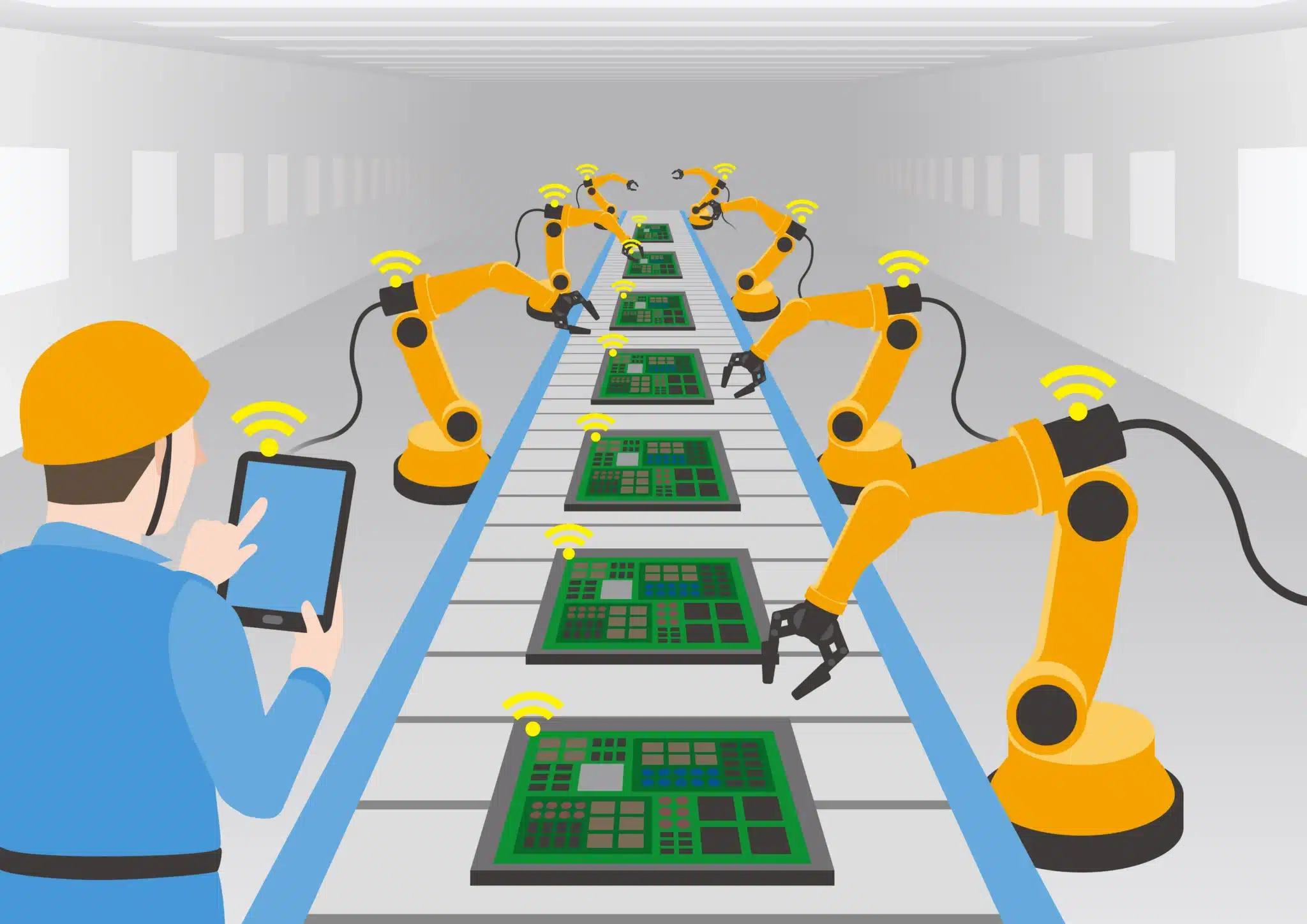
Modern automation extends far beyond the simple robotic arms that once symbolized industrial progress. Today’s manufacturing facilities leverage artificial intelligence, machine learning, Internet of Things (IoT) sensors, and sophisticated software systems that work in concert to create intelligent, self-optimizing production environments. This technological convergence is fundamentally altering the economics of manufacturing, making it possible for companies to achieve levels of efficiency and precision that were unimaginable just a decade ago.
The economic implications are staggering. Countries and regions that successfully embrace manufacturing automation are positioning themselves as leaders in global trade, while those that hesitate risk falling behind in an increasingly competitive marketplace. Understanding the power of automation isn’t just about technology—it’s about recognizing how these innovations reshape labor markets, supply chains, and ultimately, national economies.
Anúncios
Understanding the Automation Advantage in Production
At its core, manufacturing automation refers to the use of technology systems to perform production tasks with minimal human intervention. However, this simple definition belies the complexity and sophistication of modern automated systems, which can adapt to changing conditions, predict maintenance needs, and continuously improve their own performance.
The economic advantages of automation manifest across multiple dimensions. First, there’s the obvious benefit of increased productivity. Automated systems can operate continuously without fatigue, maintaining consistent quality standards across three shifts or even 24/7 operations. This translates directly into higher output volumes without proportional increases in labor costs.
Second, automation dramatically improves quality control. Human error, which accounts for a significant percentage of manufacturing defects, becomes virtually eliminated in fully automated processes. Vision systems can inspect products at speeds and with precision levels impossible for human inspectors, catching defects before they become costly recalls or damage brand reputations.
The Financial Impact of Streamlined Operations
When examining the return on investment for automation technologies, manufacturers typically see multiple cost reduction pathways opening simultaneously. Labor costs, traditionally the largest expense category for many manufacturers, can be reduced significantly—though it’s important to note that automation doesn’t simply eliminate jobs but rather transforms them toward higher-value activities.
Material waste represents another area where automation delivers substantial savings. Precision cutting, mixing, and assembly processes ensure that raw materials are used with maximum efficiency. In industries like aerospace or pharmaceuticals, where materials can be extremely expensive, even modest percentage improvements in material utilization can translate into millions of dollars in annual savings.
Energy consumption also decreases with properly implemented automation. Smart systems optimize heating, cooling, and power usage based on real-time production demands. Predictive algorithms ensure that equipment runs at peak efficiency, avoiding the energy waste associated with outdated or poorly maintained machinery.
🤖 Technologies Driving the Automation Revolution
Several key technologies form the foundation of modern manufacturing automation. Understanding these building blocks helps illustrate why current automation capabilities represent such a significant leap forward from previous generations of industrial technology.
Robotics and Collaborative Systems
Industrial robotics has evolved dramatically from the cage-enclosed, dangerous machines of the past. Today’s collaborative robots, or “cobots,” work safely alongside human workers, handling repetitive or physically demanding tasks while humans focus on problem-solving and quality oversight. These systems are increasingly affordable and easy to program, making advanced automation accessible even to small and medium-sized manufacturers.
The latest generation of robots incorporates advanced sensors and AI-driven vision systems, allowing them to handle complex tasks like sorting irregular objects, assembling delicate components, or adapting to variations in materials. This flexibility means that automated systems can now address manufacturing challenges previously thought to require human dexterity and judgment.
Artificial Intelligence and Machine Learning
AI technologies bring predictive and adaptive capabilities to manufacturing automation. Machine learning algorithms analyze vast amounts of production data to identify patterns that humans might miss, predicting equipment failures before they occur, optimizing production schedules based on demand forecasts, and continuously refining processes to improve efficiency.
These intelligent systems learn from every production run, gradually improving their performance without requiring manual reprogramming. This creates a virtuous cycle where automation becomes more valuable over time, continuously discovering new optimization opportunities within existing processes.
Internet of Things and Connected Manufacturing
IoT sensors embedded throughout modern factories create an unprecedented level of visibility into production processes. Every machine, tool, and even individual product can communicate its status, location, and condition in real-time. This connectivity enables coordinated optimization across entire production systems rather than just individual machines.
The data generated by IoT devices feeds into centralized analytics platforms, creating what’s often called the “digital twin” of the physical factory. Manufacturers can simulate changes, test new processes, and predict outcomes all in the digital realm before implementing anything on the actual production floor, dramatically reducing the risk and cost of innovation.
Transforming Supply Chain Economics Through Automation
The benefits of manufacturing automation extend well beyond the factory floor, fundamentally reshaping supply chain economics. Automated production systems can respond to demand changes with unprecedented speed and flexibility, enabling strategies like just-in-time manufacturing that minimize inventory costs while maintaining high service levels.
Automated warehousing and logistics systems integrate seamlessly with automated production, creating end-to-end efficiency from raw material receipt through finished goods delivery. Automated guided vehicles (AGVs) transport materials between production stages without human intervention, while intelligent inventory management systems ensure that the right components arrive at the right workstations exactly when needed.
This level of integration reduces working capital requirements significantly. Manufacturers no longer need to maintain large buffer inventories to guard against uncertainty in their production processes. Instead, predictable, automated production enables leaner operations with faster cash conversion cycles.
💡 Real-World Success Stories Across Industries
The theoretical advantages of automation come to life when examining specific industries that have successfully transformed their production economies through strategic technology implementation.
Automotive Manufacturing’s Automation Journey
The automotive industry pioneered large-scale manufacturing automation and continues to push the boundaries of what’s possible. Modern car factories utilize hundreds of robots working in precise coordination, welding, painting, and assembling vehicles with remarkable consistency. This automation has enabled automotive manufacturers to offer unprecedented customization—customers can specify exact configurations, and automated systems seamlessly adapt to produce each vehicle to order.
The economic impact has been transformative. Production costs have decreased substantially even as quality and customization options have increased. Manufacturers can now profitably produce vehicles in high-wage countries by leveraging automation to offset labor cost disadvantages, reshaping the global geography of automotive production.
Electronics and High-Tech Manufacturing
Electronics manufacturers face unique challenges: extremely small components, rapid product cycles, and unforgiving quality requirements. Automation addresses all these challenges simultaneously. Pick-and-place machines position microscopic components with micrometer precision at speeds impossible for human workers. Automated optical inspection systems catch defects invisible to the naked eye.
Perhaps most importantly, automation enables electronics manufacturers to rapidly retool for new products. When product lifecycles measure in months rather than years, the ability to quickly reprogram automated systems for new production runs becomes a critical competitive advantage. This flexibility transforms the economics of electronics manufacturing, enabling profitable production even for relatively small batch sizes.
Pharmaceutical Production and Quality Assurance
In pharmaceutical manufacturing, automation delivers benefits that extend beyond economics to public health. Automated systems ensure that medications are produced with exact specifications, eliminating the contamination risks and dosing inconsistencies that can occur in manual processes. This isn’t just about efficiency—it’s about patient safety.
The economic benefits remain substantial, however. Automated pharmaceutical production reduces waste of expensive active ingredients, accelerates production cycles, and provides the comprehensive documentation required by regulatory agencies. These factors combine to reduce the cost of bringing medications to market while simultaneously improving quality and safety profiles.
Workforce Transformation: The Human Element in Automated Manufacturing
Discussions of manufacturing automation often focus on concerns about job displacement, but the reality is more nuanced and, in many ways, more positive than popular narratives suggest. Automation does change the nature of manufacturing work, but it also creates new opportunities and elevates the value of human contributions.
In highly automated facilities, workers transition from performing repetitive manual tasks to roles focused on system oversight, problem-solving, and continuous improvement. These positions typically offer higher wages and better working conditions than traditional manufacturing jobs. Rather than eliminating the human workforce, automation allows people to focus on uniquely human capabilities like creativity, complex judgment, and strategic thinking.
This workforce transformation does require investment in training and education. Workers need new skills to operate in automated environments, from basic digital literacy to advanced capabilities in robotics programming, data analysis, and system maintenance. Progressive manufacturers recognize that investing in their workforce is essential to realizing automation’s full potential.
🌍 Global Competitive Dynamics and Economic Implications
Automation is reshaping the competitive landscape of global manufacturing in ways that challenge conventional wisdom about comparative advantage. For decades, manufacturers relocated production to low-wage countries to reduce labor costs. Automation changes this calculus fundamentally.
When labor represents a smaller percentage of total production costs, the advantages of low-wage locations diminish. Other factors—proximity to markets, infrastructure quality, intellectual property protection, and workforce skills—become relatively more important. This shift is driving a resurgence of manufacturing in developed economies as automation enables profitable production despite higher wage rates.
The implications for developing economies are complex. Countries that built their economic development strategies around low-cost manufacturing may find their competitive advantages eroding. However, opportunities also exist for these nations to leapfrog older technologies and implement cutting-edge automated manufacturing systems without legacy constraints.
Reshoring and Regional Manufacturing Clusters
Automation enables manufacturers to locate production closer to end markets, reducing transportation costs and delivery times while improving responsiveness to local preferences. This trend toward “reshoring” or “nearshoring” represents a significant shift in global trade patterns.
Regional manufacturing clusters are emerging where automated factories, component suppliers, and research institutions create innovation ecosystems. These clusters benefit from knowledge spillovers, specialized labor markets, and infrastructure investments, creating self-reinforcing advantages that further strengthen their competitive positions.
Implementation Strategies for Manufacturing Automation
Successfully implementing automation requires more than simply purchasing equipment. Manufacturers must approach automation strategically, with clear objectives and realistic timelines. The most successful automation initiatives begin with thorough process analysis to identify where automation will deliver the greatest value.
Starting with pilot projects allows manufacturers to develop expertise and demonstrate value before committing to larger investments. These initial projects should target processes with clear ROI potential—perhaps operations with high error rates, safety concerns, or bottlenecks limiting overall production capacity.
Integration represents one of the biggest challenges in automation implementation. New automated systems must communicate with existing equipment, software platforms, and business systems. Planning for integration from the beginning, rather than treating it as an afterthought, prevents costly complications and delays.
Financial Planning and ROI Considerations
Automation investments can be substantial, requiring careful financial planning and justification. Forward-thinking manufacturers look beyond simple payback periods to consider the strategic value of automation—enhanced flexibility, improved quality, and competitive positioning that’s difficult to quantify but critically important.
Financing options have evolved to make automation more accessible. Equipment leasing, subscription-based robot services, and vendor financing programs reduce upfront capital requirements. Some technology providers offer performance-based pricing models where manufacturers pay based on actual production improvements, aligning incentives and reducing risk.
🚀 The Future Landscape of Automated Manufacturing
Looking forward, manufacturing automation will continue evolving in exciting directions. Advances in artificial intelligence will create increasingly autonomous factories that require minimal human oversight for routine operations. Quantum computing may eventually enable optimization calculations that are currently impossible, further improving efficiency.
Additive manufacturing technologies, commonly known as 3D printing, are automating the production of complex components that previously required multiple manufacturing steps. As these technologies mature and scale, they’ll enable new business models and further transform manufacturing economics.
Sustainability considerations are becoming increasingly important in automation decisions. Future automated systems will optimize not just for cost and quality but also for environmental impact, minimizing energy consumption, reducing waste, and facilitating circular economy approaches where products are designed for eventual remanufacturing or recycling.
Building Resilient Manufacturing Economies Through Automation
Recent global disruptions have highlighted the importance of resilient supply chains and manufacturing capacity. Automation contributes to resilience in multiple ways. Automated facilities can quickly adapt to produce different products, providing flexibility when supply chains are disrupted. The reduced dependence on large workforces makes automated facilities less vulnerable to health crises or labor disputes.
Distributed manufacturing networks, enabled by automation, create redundancy that protects against regional disruptions. Rather than concentrating all production in a single location, manufacturers can operate multiple automated facilities, each capable of serving different markets or backing up other locations if needed.
The data generated by automated systems also contributes to resilience by providing early warning of potential problems. Predictive analytics can identify supply chain vulnerabilities, equipment at risk of failure, or quality trends that might indicate developing issues, allowing manufacturers to address problems before they become crises.
Embracing the Automated Future with Strategic Vision
The transformation of manufacturing through automation represents one of the defining economic shifts of our era. Companies, workers, and policymakers all have stakes in ensuring this transformation creates broadly shared prosperity rather than leaving some behind.
For manufacturers, the path forward requires balancing ambition with pragmatism—pursuing automation opportunities aggressively while maintaining focus on core business fundamentals. The most successful manufacturers will be those that view automation not as a cost-cutting exercise but as a strategic capability that enables new possibilities in quality, customization, and responsiveness.
The power of automation in streamlining production processes extends far beyond simple efficiency gains. It’s about building manufacturing economies that are more competitive, resilient, and sustainable. It’s about creating better jobs for workers and better products for customers. It’s about securing economic prosperity in an increasingly complex and competitive global marketplace.
As automation technologies continue advancing and becoming more accessible, the question facing manufacturers isn’t whether to automate but how to do so strategically. Those who embrace this challenge with vision and determination will find themselves leading the next generation of manufacturing excellence, while those who hesitate risk being left behind in an economy increasingly defined by automated production capabilities. The revolution in manufacturing economics is well underway—the time to act is now.
