
Anúncios
The maritime industry stands at a pivotal crossroads, where centuries-old traditions meet cutting-edge technology, transforming how goods traverse our oceans and revolutionizing global trade networks.

⚓ The Digital Transformation Wave Reshaping Ocean Commerce
Maritime logistics has long been the backbone of international commerce, facilitating approximately 90% of global trade. Yet for decades, the industry operated with paper-based systems, fragmented communication channels, and limited real-time visibility. Today’s modernization efforts are dismantling these archaic barriers, introducing sophisticated digital solutions that promise unprecedented efficiency, transparency, and sustainability.
Anúncios
The urgency for transformation has never been more apparent. Supply chain disruptions during recent global events exposed critical vulnerabilities in traditional maritime operations. Port congestion, container shortages, and communication breakdowns highlighted the desperate need for integrated digital ecosystems that can respond dynamically to changing conditions.
Industry leaders are now investing billions in technologies that seemed like science fiction just a decade ago. Artificial intelligence, blockchain, Internet of Things sensors, and autonomous vessels are no longer experimental concepts—they’re becoming operational realities that define competitive advantage in maritime logistics.
Anúncios
🚢 Smart Ports: The Gateway to Efficient Cargo Movement
Modern port facilities are transforming into intelligent hubs where data flows as smoothly as cargo. Smart ports leverage advanced sensor networks, automated equipment, and predictive analytics to optimize vessel turnaround times and maximize throughput capacity.
Rotterdam, Singapore, and Hamburg have emerged as pioneers in smart port development. These facilities deploy automated cranes that communicate with terminal operating systems, reducing human error and accelerating loading operations. Real-time traffic management systems coordinate vessel movements with precision previously unimaginable, minimizing waiting times and fuel consumption.
The implementation of 5G networks within port environments enables seamless connectivity between thousands of devices simultaneously. This infrastructure supports everything from automated guided vehicles transporting containers to augmented reality systems assisting maintenance technicians with equipment repairs.
Key Technologies Powering Smart Port Operations
- Automated Stacking Cranes (ASCs): Remotely operated equipment that positions containers with millimeter precision while reducing labor costs and safety incidents
- Optical Character Recognition (OCR): Cameras that automatically identify container numbers and damage, eliminating manual inspection delays
- Predictive Maintenance Systems: IoT sensors that monitor equipment health and predict failures before they occur, preventing costly downtime
- Digital Twin Technology: Virtual replicas of physical port operations that enable simulation and optimization before implementing changes
- Blockchain Documentation: Immutable digital records that streamline customs clearance and reduce documentation processing from days to minutes
📊 Data Analytics: Transforming Decision-Making at Sea
The maritime sector generates enormous volumes of data from weather patterns and fuel consumption to cargo conditions and vessel performance metrics. Advanced analytics platforms now transform this raw information into actionable intelligence that drives strategic and operational decisions.
Predictive analytics help shipping companies optimize route planning by analyzing historical weather data, current patterns, and geopolitical risks. These systems recommend the most efficient paths that balance speed, fuel economy, and safety considerations. Some estimates suggest optimized routing can reduce fuel consumption by 10-15%, translating into substantial cost savings and environmental benefits.
Real-time visibility platforms aggregate data from multiple sources, providing stakeholders with comprehensive views of their supply chains. Shippers can track container locations with GPS precision, monitor temperature-sensitive cargo conditions, and receive alerts about potential delays before they impact delivery schedules.
The Role of Big Data in Cargo Management
Container tracking has evolved far beyond simple location updates. Modern systems monitor dozens of variables including humidity, shock events, door openings, and even air quality inside containers. This granular visibility proves especially valuable for pharmaceuticals, fresh produce, and high-value electronics where environmental conditions directly impact product quality.
Machine learning algorithms analyze historical shipping data to identify patterns and anomalies. These systems can predict equipment failures, detect fraudulent activities, and recommend optimal container loading configurations that maximize space utilization while maintaining cargo safety standards.
🌐 Blockchain: Building Trust Through Transparency
Few technologies generate as much excitement in maritime logistics as blockchain. This distributed ledger technology addresses fundamental challenges that have plagued international shipping for generations: documentation complexity, lack of transparency, and vulnerability to fraud.
Traditional maritime transactions involve dozens of parties—shippers, carriers, freight forwarders, customs authorities, banks, and insurance companies—each maintaining separate records. This fragmentation creates opportunities for errors, delays, and disputes. Blockchain establishes a single source of truth that all authorized participants can access and verify.
Maersk and IBM’s TradeLens platform exemplifies blockchain’s potential in maritime logistics. The system digitizes the entire documentation process, from bills of lading to customs declarations. Early adopters report documentation processing times reduced from weeks to hours, with significantly lower administrative costs.
Smart contracts—self-executing agreements coded into blockchain networks—automate many transactional processes. When predefined conditions are met, such as a container arriving at destination, payments can trigger automatically without intermediary involvement. This automation reduces disputes and accelerates financial settlements.
🤖 Autonomous Vessels: Charting Uncharted Waters
Autonomous shipping represents perhaps the most ambitious frontier in maritime modernization. While fully crewless ocean-going vessels remain years away from commercial viability, significant progress is accelerating in specific applications and controlled environments.
Norway leads global efforts with projects like Yara Birkeland, the world’s first fully electric and autonomous container ship designed for short-sea shipping. These vessels use sophisticated sensor arrays—radar, LIDAR, cameras, and AIS transceivers—combined with artificial intelligence to navigate safely without human intervention.
The potential benefits are compelling: reduced labor costs, elimination of human error that causes 75-96% of maritime accidents, and optimized fuel consumption through AI-controlled operations. However, significant challenges remain regarding regulatory frameworks, liability questions, and cybersecurity vulnerabilities.
Semi-Autonomous Technologies Delivering Value Today
While fully autonomous ships capture headlines, semi-autonomous systems are delivering practical benefits immediately. Dynamic positioning systems automatically maintain vessel position during loading operations. Collision avoidance systems alert crews to potential hazards and can execute emergency maneuvers when necessary. Auto-docking systems guide vessels into berths with precision that exceeds human capabilities.
These incremental innovations represent the evolutionary path toward greater autonomy, building technological capabilities and regulatory confidence that will eventually enable fully crewless operations in appropriate contexts.
🌱 Sustainability: Green Technologies Steering the Industry
Environmental pressures are driving profound changes in maritime operations. The International Maritime Organization’s ambitious targets—reducing greenhouse gas emissions by at least 50% by 2050 compared to 2008 levels—require fundamental transformations in vessel design, fuel sources, and operational practices.
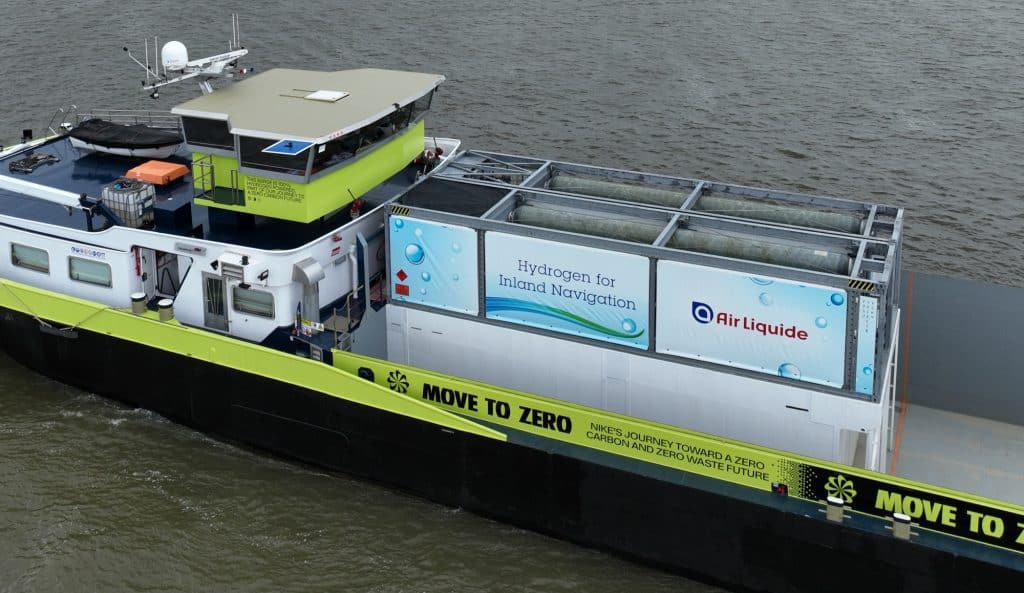
Alternative fuels are gaining traction across the industry. Liquefied natural gas (LNG) offers immediate emission reductions compared to traditional heavy fuel oil. Meanwhile, longer-term solutions including hydrogen, ammonia, and advanced biofuels are progressing through development and pilot programs. Major shipping companies have ordered methanol-powered vessels, signaling confidence in this transition fuel.
Electrification works well for short-sea shipping and port operations. Battery-powered ferries operate successfully in Scandinavia, while hybrid systems combining conventional engines with electric propulsion are becoming standard on new vessel orders. Shore power connections allow ships to shut down auxiliary engines while docked, eliminating emissions in port environments.
| Technology | Emission Reduction Potential | Current Maturity | Implementation Timeline |
|---|---|---|---|
| LNG Propulsion | 15-25% | Commercial | Widely Available |
| Wind-Assisted Propulsion | 10-30% | Demonstration | 2025-2030 |
| Hydrogen Fuel Cells | 100% (zero emission) | Pilot Projects | 2030-2040 |
| Ammonia Fuel | 100% (carbon-free) | Development | 2030-2040 |
| Battery Electric | 100% (operational) | Commercial (short routes) | Niche Applications |
🔐 Cybersecurity: Protecting Digital Maritime Infrastructure
As maritime systems become increasingly connected and digitized, cybersecurity emerges as a critical concern. Vessels now operate sophisticated networks connecting navigation systems, cargo management platforms, communication equipment, and business systems. Each connection point represents a potential vulnerability.
High-profile incidents have demonstrated real risks. GPS spoofing attacks have misdirected vessels. Ransomware has disrupted port operations. Data breaches have exposed sensitive commercial information. The consequences extend beyond financial losses to encompass safety risks when critical navigation or propulsion systems are compromised.
Effective maritime cybersecurity requires multilayered approaches. Network segmentation isolates critical operational systems from administrative networks. Regular security audits identify vulnerabilities before attackers exploit them. Crew training develops human defenses against social engineering attacks that often provide initial access to systems.
International cooperation is essential, as maritime operations cross jurisdictional boundaries. Industry groups like BIMCO and regulatory bodies including the IMO are developing cybersecurity guidelines and standards that establish baseline protections across the global fleet.
👥 Workforce Evolution: Reskilling for the Digital Age
Maritime modernization fundamentally changes required workforce skills. Traditional seafaring expertise remains valuable, but modern maritime professionals need digital literacy, data analysis capabilities, and technological troubleshooting skills that weren’t part of conventional maritime education.
Training programs are adapting to prepare the next generation. Simulation technologies enable immersive learning experiences where cadets practice responding to complex scenarios without real-world risks. Virtual reality systems teach equipment operation and emergency procedures with unprecedented realism.
The transition creates both challenges and opportunities. Some traditional roles face obsolescence while new positions emerge in areas like data analytics, cybersecurity, and autonomous system operation. Progressive companies invest in comprehensive reskilling programs that help existing employees transition to these evolving roles rather than simply replacing human expertise with technology.
Diversity initiatives are gaining momentum, recognizing that innovation benefits from varied perspectives. Efforts to increase female participation in maritime careers and attract talent from technology sectors help address workforce shortages while bringing fresh thinking to traditional industry challenges.
🌏 Regional Approaches to Maritime Innovation
Geographic variations influence how maritime modernization unfolds globally. Asian ports, handling massive container volumes, prioritize automation that maximizes throughput efficiency. European initiatives often emphasize environmental sustainability and regulatory compliance. North American efforts balance infrastructure improvements with domestic manufacturing considerations.
China’s aggressive investment in port automation and digital infrastructure reflects national strategies to dominate global logistics networks. Singapore positions itself as a maritime technology innovation hub, attracting startups and established companies to develop and test cutting-edge solutions. Scandinavian countries leverage strong environmental consciousness to pioneer green shipping technologies.
These regional approaches create a mosaic of innovation where best practices emerge, are tested, and gradually diffuse throughout the global maritime industry. What succeeds in one context may require adaptation for different operational environments, regulatory frameworks, or market conditions.
💡 The Integration Challenge: Making Systems Work Together
Perhaps the most underestimated challenge in maritime logistics modernization isn’t adopting individual technologies but integrating them into cohesive ecosystems. Legacy systems, proprietary platforms, and competing standards create fragmentation that undermines potential benefits.
Industry initiatives are working toward standardization and interoperability. Data exchange protocols enable different systems to communicate effectively. API frameworks allow software platforms to share information seamlessly. Open-source movements reduce dependence on proprietary solutions that lock organizations into specific vendors.
Successful integration requires not just technical solutions but organizational change management. Stakeholders must agree on data sharing arrangements, governance structures, and benefit distribution mechanisms. Building trust among traditionally competitive entities represents a substantial cultural shift for an industry accustomed to guarding information closely.
🔮 Emerging Horizons: What’s Next for Maritime Logistics
The modernization journey is far from complete. Emerging technologies promise even more dramatic transformations in coming decades. Quantum computing could revolutionize route optimization and logistics planning by solving complex calculations currently beyond conventional computer capabilities.
Advanced materials including graphene composites and self-healing coatings will extend vessel lifespans while reducing maintenance requirements. Additive manufacturing aboard ships could enable on-demand spare parts production, eliminating supply chain delays for critical components.
Satellite technology continues evolving, with new constellations providing global high-speed internet connectivity and unprecedented monitoring capabilities. These networks will support real-time data exchange from the remotest ocean locations, enabling shore-based experts to assist with complex problems regardless of vessel position.
The concept of “logistics as a service” may redefine business models, with comprehensive platforms managing entire supply chains through integrated digital ecosystems. Shippers could access on-demand capacity, optimized routing, automated documentation, and real-time visibility through unified interfaces, abstracting away operational complexity.
🚀 Navigating Forward: Strategies for Successful Modernization
Organizations approaching maritime logistics modernization should adopt strategic frameworks that balance ambition with pragmatism. Starting with pilot projects that demonstrate value builds internal support and identifies implementation challenges before large-scale deployments.
Partnership approaches spread risk and combine complementary capabilities. Technology providers bring innovation but may lack maritime domain expertise. Established maritime companies understand operational realities but may lack digital transformation experience. Collaborative models leverage both strengths.
Flexibility matters in rapidly evolving technological landscapes. Avoiding overly rigid implementations allows organizations to incorporate emerging innovations without scrapping entire systems. Modular architectures and open standards facilitate continuous evolution rather than requiring periodic wholesale replacements.
Finally, maintaining focus on fundamental objectives prevents technology adoption for its own sake. The goal isn’t implementing the most advanced systems but solving real problems—reducing costs, improving reliability, enhancing sustainability, and delivering superior customer experiences. Technologies succeed when they demonstrably advance these core business objectives.
The maritime industry’s modernization represents one of the most significant transformations in global commerce. While challenges remain substantial, the trajectory is clear. Digital technologies, sustainability imperatives, and evolving customer expectations are reshaping how goods move across oceans. Organizations that embrace this evolution thoughtfully, investing strategically while managing risks prudently, will navigate successfully toward a more efficient, transparent, and sustainable maritime future. Those clinging to traditional approaches risk becoming relics of an analog past in an increasingly digital world.
