
Anúncios
Artificial intelligence is transforming how businesses measure environmental, social, and governance performance, creating unprecedented opportunities for transparent and accurate sustainability assessment in corporate landscapes worldwide.

🌍 The Urgent Need for Better ESG Evaluation Systems
Environmental, social, and governance criteria have evolved from optional corporate responsibility initiatives into critical business imperatives. Investors managing trillions of dollars now demand comprehensive ESG data before making investment decisions. Traditional ESG scoring methods, however, struggle with inconsistencies, subjective interpretations, and data gaps that undermine confidence in sustainability metrics.
Anúncios
The limitations of conventional ESG assessment approaches have become increasingly apparent. Different rating agencies often produce wildly divergent scores for the same company, creating confusion among stakeholders. Manual data collection processes are time-consuming, expensive, and prone to human error. Companies can engage in greenwashing, presenting misleading sustainability credentials that traditional evaluation methods fail to detect.
This gap between the growing demand for reliable ESG information and the inadequacy of existing evaluation frameworks has created a perfect opportunity for technological innovation. Artificial intelligence offers solutions that address fundamental weaknesses in current ESG scoring methodologies while enabling previously impossible levels of analysis and insight.
Anúncios
🤖 How Artificial Intelligence Transforms ESG Data Analysis
AI-powered ESG platforms leverage multiple advanced technologies to revolutionize sustainability assessment. Machine learning algorithms process vast datasets from diverse sources, identifying patterns and correlations invisible to human analysts. Natural language processing examines corporate communications, regulatory filings, news articles, and social media to extract meaningful ESG insights.
Computer vision technology analyzes satellite imagery to monitor deforestation, track emissions from industrial facilities, and verify environmental claims. Predictive analytics forecast future ESG performance based on historical trends and current behaviors. These capabilities collectively enable more comprehensive, objective, and timely ESG evaluations than traditional methods.
The data sources available to AI systems far exceed what human analysts can effectively process. Corporate sustainability reports, government databases, supply chain documentation, employee reviews, customer feedback, and third-party certifications all contribute to a multidimensional understanding of organizational ESG performance.
Real-Time Monitoring and Dynamic Assessment
Traditional ESG ratings typically update annually or quarterly, creating significant lag between corporate actions and their reflection in sustainability scores. AI systems continuously monitor multiple data streams, enabling real-time ESG assessment that responds immediately to new information.
This dynamic approach captures emerging risks and opportunities that static annual evaluations miss. When environmental incidents occur, social controversies emerge, or governance failures come to light, AI-powered systems immediately incorporate these developments into updated risk assessments and ESG scores.
Financial institutions using real-time ESG intelligence can make more informed investment decisions, adjusting portfolios quickly in response to changing sustainability profiles. Corporate executives gain immediate feedback on how strategic decisions affect their organization’s ESG standing, enabling more responsive sustainability management.
📊 Addressing Inconsistency Through Standardized AI Frameworks
One of the most significant problems in ESG scoring is the lack of standardization across rating agencies. Research has shown correlation coefficients between major ESG rating providers as low as 0.5, indicating they frequently disagree about which companies demonstrate strong sustainability performance.
These inconsistencies stem from different methodologies, varying data sources, and subjective weighting of ESG factors. AI can reduce this variability by applying consistent analytical frameworks across all evaluated entities. Machine learning models trained on standardized datasets produce more comparable results than human analysts using different proprietary methodologies.
Transparent AI algorithms allow stakeholders to understand exactly how ESG scores are calculated, which factors receive emphasis, and how different data points influence final ratings. This transparency builds confidence in ESG assessments and enables meaningful comparisons between organizations.
Eliminating Human Bias and Subjectivity
Human analysts inevitably bring personal biases, cultural assumptions, and cognitive limitations to ESG evaluation. These subjective elements create inconsistencies and reduce the reliability of sustainability assessments. Well-designed AI systems apply identical criteria uniformly across all evaluated entities, eliminating bias-driven variations.
However, it’s important to acknowledge that AI systems can perpetuate biases present in their training data or embedded in algorithm design. Responsible AI development for ESG scoring requires careful attention to fairness, regular audits for unintended bias, and diverse teams overseeing system development and deployment.
🔍 Detecting Greenwashing with Advanced Analytics
Greenwashing represents a significant challenge in corporate sustainability. Companies make misleading environmental claims, exaggerate sustainability achievements, and selectively report favorable metrics while hiding negative information. Traditional ESG evaluation often struggles to distinguish genuine commitment from sophisticated marketing.
AI excels at detecting inconsistencies between corporate claims and verifiable evidence. Natural language processing analyzes sustainability communications for vague language, unsubstantiated assertions, and misleading comparisons that characterize greenwashing. Machine learning models compare corporate statements against operational data, identifying discrepancies that suggest exaggerated or false claims.
Sentiment analysis tracks how companies discuss sustainability over time, flagging sudden changes in rhetoric that may indicate opportunistic rather than authentic commitment. Network analysis examines relationships between corporate entities, revealing when companies use complex structures to obscure environmental or social impacts.
Verification Through Alternative Data Sources
AI systems don’t rely solely on corporate disclosures. Satellite imagery verifies environmental claims about land use, emissions, and conservation efforts. Supply chain data confirms ethical sourcing assertions. Employee reviews provide insights into workplace culture that complement official corporate statements.
This multi-source verification approach makes greenwashing significantly more difficult. Companies can’t simply craft favorable sustainability narratives when AI systems cross-reference claims against independent evidence. The result is greater accountability and more honest sustainability reporting.
💡 Enhanced Materiality Assessment and Risk Prediction
Not all ESG factors matter equally for every organization. Materiality assessment identifies which environmental, social, and governance issues significantly impact specific companies based on their industry, geography, and business model. Traditional materiality analysis relies heavily on analyst judgment and can miss important risk factors.
AI-powered materiality assessment processes vast datasets to identify which ESG factors historically correlate with financial performance, regulatory action, reputational damage, or operational disruption for companies with similar characteristics. Machine learning models detect subtle patterns that indicate emerging material risks before they become obvious.
Predictive analytics forecast how current ESG performance may translate into future financial outcomes, regulatory challenges, or market opportunities. These forward-looking insights help investors understand not just how companies perform today but how sustainability factors will likely affect their prospects over investment horizons.
Industry-Specific ESG Intelligence
AI systems develop specialized knowledge about ESG risks and opportunities across different sectors. Environmental factors dominate materiality for energy and manufacturing companies, while social issues around labor practices and data privacy matter more for technology and retail organizations.
Machine learning models trained on industry-specific data produce more relevant ESG assessments than generic frameworks applied uniformly across all sectors. This specialized approach helps investors compare companies against appropriate peer groups and understand context-specific sustainability challenges.
🌐 Global Scalability and Comprehensive Coverage
Traditional ESG research concentrates on large public companies in developed markets, leaving significant gaps in sustainability coverage. Small and medium enterprises, private companies, and organizations in emerging economies often lack ESG ratings despite their environmental and social impacts.
AI dramatically reduces the cost and time required to generate ESG assessments, enabling coverage extension to previously unrated entities. Automated data collection and analysis allow platforms to evaluate thousands of additional companies without proportional increases in human analyst resources.
This expanded coverage benefits multiple stakeholders. Investors gain ESG intelligence on broader investment universes. Supply chain managers can assess sustainability performance of diverse suppliers. Policymakers obtain comprehensive data for regulatory development and enforcement.
Cross-Border Consistency and Cultural Sensitivity
Global ESG assessment requires navigating different regulatory frameworks, reporting standards, languages, and cultural contexts. AI systems with natural language processing capabilities analyze documents in multiple languages, ensuring companies worldwide receive evaluation using consistent standards.
However, effective global ESG scoring must also recognize legitimate cultural differences in how societies prioritize and address sustainability challenges. Advanced AI systems balance standardization for comparability with contextual understanding that respects diverse approaches to environmental and social responsibility.
📈 Integration with Investment Decision-Making
The ultimate value of ESG scoring lies in its integration with financial analysis and investment processes. AI enables seamless incorporation of sustainability factors into portfolio construction, risk management, and performance attribution.
Machine learning models identify relationships between ESG characteristics and financial metrics like returns, volatility, credit risk, and valuation multiples. These insights help investors understand how sustainability factors affect investment outcomes and optimize portfolios accordingly.
Automated ESG screening filters investment universes based on sustainability criteria, excluding companies with unacceptable practices or identifying leaders in specific environmental or social areas. AI-powered tools monitor portfolio-level ESG characteristics, alerting managers when holdings’ sustainability profiles deteriorate.
Regulatory Compliance and Reporting Automation
Regulatory requirements around ESG disclosure and sustainable finance are expanding rapidly worldwide. Financial institutions face increasing obligations to report on portfolio sustainability characteristics, climate risks, and alignment with environmental objectives.
AI systems streamline compliance by automatically generating required reports, tracking regulatory changes, and ensuring investment processes meet evolving standards. This automation reduces compliance costs while improving accuracy and consistency in regulatory submissions.
🚀 Challenges and Ethical Considerations
Despite its transformative potential, AI-powered ESG scoring faces important challenges. Data quality remains fundamental—machine learning models produce unreliable results when trained on incomplete, inaccurate, or biased information. Many companies still provide limited sustainability disclosure, constraining AI system effectiveness.
Algorithm transparency and explainability represent critical concerns. Stakeholders need to understand how AI systems reach conclusions about ESG performance. Black-box models that generate scores without clear reasoning undermine confidence and accountability.
Governance frameworks must address who controls AI-powered ESG systems, how competing interests balance, and what recourse exists when assessments are disputed. Clear standards for AI system validation, ongoing monitoring, and periodic auditing are essential.
Balancing Automation with Human Expertise
AI should augment rather than completely replace human judgment in ESG assessment. Experienced analysts provide contextual understanding, ethical reasoning, and qualitative insights that complement AI’s quantitative capabilities. The most effective approaches combine technological efficiency with human wisdom.
Organizations deploying AI for ESG scoring should maintain human oversight, establish clear escalation procedures for unusual situations, and regularly validate system outputs against expert judgment. This balanced approach maximizes both efficiency and quality.
🌟 The Path Forward: Building Sustainable AI-Driven ESG Ecosystems
Realizing AI’s full potential for ESG scoring requires collaboration among multiple stakeholders. Technology providers, data suppliers, rating agencies, investors, corporations, regulators, and civil society organizations must work together to develop robust, trustworthy systems.
Standardization efforts should establish common data formats, reporting frameworks, and assessment methodologies that enable interoperability while allowing innovation. Open-source AI models and shared datasets can accelerate progress and ensure broad access to advanced ESG intelligence.
Investment in AI literacy helps stakeholders understand both capabilities and limitations of these technologies. Education initiatives should reach corporate sustainability professionals, investment analysts, policymakers, and the general public to build informed engagement with AI-powered ESG systems.
Regulatory frameworks should encourage responsible AI development while avoiding overly prescriptive rules that stifle innovation. Principles-based approaches emphasizing transparency, fairness, accountability, and ongoing validation provide appropriate guardrails without constraining beneficial technological advancement.
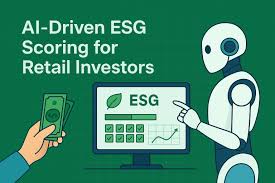
🎯 Transforming Corporate Sustainability Through Intelligent Assessment
AI-powered ESG scoring represents more than a technical improvement in measurement methodology. It fundamentally changes incentives and behaviors by making sustainability performance more transparent, comparable, and consequential for corporate success.
When companies know comprehensive AI systems continuously monitor their environmental and social impacts, the calculus around sustainability investments shifts. Short-term thinking gives way to long-term value creation. Greenwashing becomes riskier as detection capabilities improve. Genuine sustainability leadership receives recognition and market rewards.
This transformation extends beyond large corporations to encompass supply chains, small businesses, and emerging markets. Comprehensive ESG intelligence creates accountability throughout economic systems, accelerating progress toward global sustainability goals.
The integration of artificial intelligence into ESG assessment marks an inflection point in corporate sustainability. As these technologies mature, improve, and achieve widespread adoption, they will drive meaningful progress on environmental protection, social equity, and governance quality. The revolution in ESG scoring powered by AI isn’t just about better measurements—it’s about creating the transparent, accountable systems necessary for a truly sustainable future.
Organizations, investors, and policymakers who embrace these innovations position themselves at the forefront of sustainable business transformation. Those who understand and leverage AI-powered ESG intelligence gain competitive advantages, manage risks more effectively, and contribute to positive global change. The future of sustainability assessment has arrived, and it’s powered by artificial intelligence.
