
Anúncios
Learning piano has never been more accessible thanks to modern technology and innovative mobile applications designed to guide beginners and experienced musicians alike.



Gone are the days when aspiring pianists had to invest heavily in private lessons or struggle through outdated instruction books. Today’s piano learning apps combine artificial intelligence, gamification, and structured curriculum to create engaging, personalized learning experiences right at your fingertips.
Anúncios
Whether you’re a complete beginner curious about tickling the ivories or an intermediate player looking to refine your technique, these applications offer flexibility, instant feedback, and the ability to learn at your own pace from the comfort of home.
🎹 Why Choose an App to Learn Piano?
Traditional piano instruction certainly has its merits, but mobile applications have democratized music education in unprecedented ways. The barriers that once prevented people from pursuing their musical dreams—cost, scheduling conflicts, geographic limitations—are steadily dissolving.
Anúncios
Piano learning apps typically cost a fraction of traditional lessons while offering comprehensive curricula developed by experienced music educators. You’re no longer bound by your teacher’s availability or studio hours. Practice at midnight if inspiration strikes, or squeeze in a quick lesson during your lunch break.
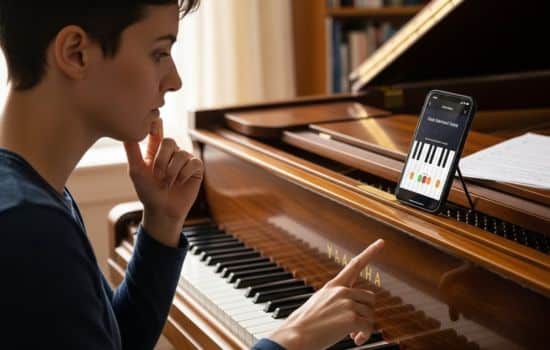
The technology behind these applications has evolved remarkably. Modern apps use microphone recognition to listen to your playing in real-time, providing immediate feedback on rhythm, pitch accuracy, and timing. This instant correction helps prevent bad habits from forming while reinforcing proper technique.
Gamification elements keep motivation high by transforming tedious exercises into engaging challenges. Earning stars, unlocking new songs, and tracking your progress creates a sense of accomplishment that sustains long-term commitment.
🌟 Key Features to Look for in Piano Learning Apps
Not all piano apps are created equal. When selecting the right application for your learning journey, consider these essential features that separate exceptional tools from mediocre alternatives.
Real-Time Feedback Technology
The most effective piano learning apps employ sophisticated audio recognition software that listens as you play. This technology analyzes each note, detecting whether you’ve hit the correct key and timing. Immediate feedback prevents you from unknowingly reinforcing mistakes.
Look for apps that clearly indicate correct and incorrect notes, ideally with visual cues that help you understand exactly where adjustments are needed. The best systems adapt to your playing speed, allowing you to learn at a comfortable pace.
Structured Learning Paths
Quality piano apps organize lessons in progressive sequences, building skills systematically from foundational concepts to advanced techniques. This structured approach ensures you don’t skip critical steps in your musical development.
Beginners should seek apps that start with basics like hand positioning, note recognition, and simple melodies before advancing to chord progressions and complex pieces. Clear milestones and level systems help you track your advancement through the curriculum.
Diverse Song Libraries
Motivation thrives when you’re playing music you genuinely enjoy. The best piano learning apps offer extensive song collections spanning multiple genres—classical masterpieces, contemporary pop hits, jazz standards, film scores, and everything in between.
Regular content updates keep the experience fresh, introducing new songs that reflect current musical trends while maintaining a solid foundation of timeless compositions.

🎼 Popular Piano Learning Apps Worth Exploring
The market offers numerous piano learning applications, each with unique approaches and specializations. Understanding the landscape helps you make an informed choice aligned with your specific goals and learning style.
Simply Piano: Comprehensive Learning for All Levels
Simply Piano has emerged as one of the most popular piano education apps worldwide, and for good reason. Developed by JoyTunes, this application combines professional music education principles with engaging technology.
The app works with both acoustic and digital pianos, as well as keyboards. Its sophisticated audio recognition technology listens through your device’s microphone, providing instant feedback as you practice. The curriculum progresses logically from absolute beginner exercises through intermediate repertoire.
What sets Simply Piano apart is its extensive song library spanning classical, pop, and contemporary genres. You’ll find everything from Mozart to Coldplay, keeping practice sessions interesting regardless of your musical preferences.
The interface is intuitive and visually appealing, with falling notes that guide you through each piece. Color-coded fingering suggestions help beginners develop proper technique from the start.
Flowkey: Learn with Popular Songs
Flowkey takes a song-centric approach to piano education, offering over 1,500 arrangements performed by professional pianists. The app displays both traditional sheet music and a visual keyboard, helping learners connect notation with physical keys.
The platform divides songs into segments, allowing you to practice challenging sections repeatedly before combining them into complete performances. Video tutorials featuring real pianists demonstrate proper hand positioning and technique.
Flowkey’s wait mode is particularly helpful for beginners—the app pauses instruction until you play the correct note, ensuring you never feel rushed or overwhelmed.
Yousician: Interactive Music Education
While Yousician covers multiple instruments, its piano curriculum is comprehensive and well-structured. The gamified approach transforms practice into an entertaining experience with missions, challenges, and weekly competitions.
The app provides detailed video lessons explaining music theory concepts, proper technique, and performance tips. Its scoring system evaluates accuracy, timing, and expression, giving you clear metrics to track improvement.
📱 Making the Most of Your Piano Learning App
Downloading a piano app is just the beginning. Maximizing your progress requires consistent practice, smart strategies, and the right mindset.
Establish a Regular Practice Routine
Consistency trumps intensity when learning piano. Twenty minutes of focused daily practice yields better results than occasional marathon sessions. Schedule practice time as you would any important appointment, treating it as a non-negotiable part of your day.
Most piano apps track your practice streaks and progress, providing motivation to maintain consistency. These metrics transform abstract effort into tangible accomplishment.
Set Realistic, Achievable Goals
Break your piano learning journey into specific, measurable objectives. Instead of vague aspirations like “get better at piano,” aim for concrete targets: “master C major scale at 100 BPM” or “play ‘Für Elise’ without mistakes.”
Piano learning apps typically organize content into levels and achievements that provide natural goal structures. Celebrate each milestone, recognizing that proficiency develops gradually through accumulated small victories.
Supplement App Learning with Theory Knowledge
While apps excel at teaching practical playing skills, dedicating time to music theory deepens your understanding and accelerates progress. Learn to read sheet music, understand key signatures, recognize chord progressions, and comprehend rhythmic notation.
Many piano apps integrate theory lessons directly into their curricula, but supplementing with external resources—books, YouTube tutorials, or theory-focused apps—enriches your musical education.
🎯 Overcoming Common Challenges in App-Based Piano Learning
Every learning journey encounters obstacles. Understanding common challenges helps you navigate them successfully rather than becoming discouraged.
Maintaining Motivation During Plateaus
Progress isn’t linear. You’ll experience periods of rapid improvement followed by frustrating plateaus where advancement seems stagnant. This is completely normal and doesn’t indicate you’ve reached your limit.
During plateaus, vary your practice routine. If you’ve been focusing on technical exercises, spend time learning fun songs. If you’ve been playing familiar pieces, challenge yourself with new genres or more difficult arrangements.
Piano learning apps combat monotony through diverse content and gamification. Take advantage of challenges, competitions, and new song releases to keep your practice fresh and engaging.
Developing Proper Technique Without In-Person Instruction
One legitimate concern about app-based learning is developing improper technique without a teacher’s watchful eye. While apps can’t physically adjust your hand position, many include detailed video demonstrations and explanations of proper form.
Record yourself playing and compare your posture, hand shape, and finger movement to the app’s instructional videos. Consider supplementing app learning with occasional lessons from a qualified teacher who can assess your technique and provide personalized corrections.
Transitioning from App to Real-World Performance
Playing along with an app differs from performing independently. The visual cues and instant feedback that support app-based practice won’t be available when playing for friends or in group settings.
Regularly practice without the app’s visual aids, relying solely on sheet music or memory. This builds independence and prepares you for performance situations where you won’t have digital assistance.
💡 Combining Apps with Other Learning Resources
Piano learning apps are powerful tools, but they work best as part of a comprehensive musical education rather than standalone solutions.
YouTube offers countless free tutorials covering specific techniques, songs, and theoretical concepts. Channels dedicated to piano instruction provide supplementary perspectives that complement app-based learning.
Music theory books and workbooks deepen your understanding of why music works the way it does. This knowledge transforms you from someone who can play notes into a musician who understands the language of music.
Consider joining online piano communities where learners share progress, exchange tips, and provide encouragement. The social dimension of music learning—even when virtual—sustains motivation and creates accountability.
🚀 From Beginner to Proficient: Setting Long-Term Expectations
Realistic expectations prevent discouragement while ambitious goals drive progress. Understanding typical learning timelines helps you gauge your advancement accurately.
Most beginners can play simple melodies within their first few weeks of consistent practice. After three to six months, you’ll likely master basic songs and develop fundamental technical skills like proper hand positioning and finger independence.
Intermediate proficiency—playing moderately complex pieces, understanding key signatures, and performing with expression—typically develops over one to two years of regular practice. Advanced skills requiring refined technique and nuanced interpretation emerge after several years of dedicated study.
These timelines assume consistent daily practice and active engagement with learning materials. Your personal progress depends on practice frequency, prior musical experience, natural aptitude, and the quality of your chosen learning resources.
🎵 The Future of Digital Piano Education
Piano learning technology continues evolving rapidly. Artificial intelligence is becoming increasingly sophisticated at analyzing playing technique and providing personalized feedback tailored to individual learners’ specific weaknesses.
Virtual reality applications are emerging that create immersive learning environments, potentially revolutionizing how we experience music education. Augmented reality features may soon overlay digital information onto real pianos, guiding hand placement and visualizing musical concepts in real-time.
Despite technological advances, the fundamental elements of piano mastery remain constant: consistent practice, theoretical understanding, technical precision, and musical expression. Apps are tools that facilitate these elements—powerful catalysts for learning, but not replacements for dedication and effort.
🌈 Starting Your Musical Journey Today
The perfect time to begin learning piano is right now. You don’t need expensive equipment, extensive free time, or natural talent—just curiosity, commitment, and a quality learning app to guide your journey.
Start by downloading a reputable piano learning application and committing to just ten minutes of daily practice. These brief sessions accumulate into significant progress over weeks and months. As playing becomes habitual and enjoyable, you’ll naturally extend practice time.
Remember that every accomplished pianist was once a complete beginner who struggled with simple exercises. The distance between where you are now and where you want to be is crossed through consistent small steps, not giant leaps.
Modern piano learning apps have removed traditional barriers to music education, making this beautiful art form accessible to anyone with a smartphone and determination. Your musical journey awaits—the first note is always the hardest to play, but also the most important.
Whether you dream of performing classical concertos, playing contemporary pop songs, improvising jazz standards, or simply enjoying music as a personal hobby, app-based piano learning provides the foundation for achieving those goals. The technology, curriculum, and support systems are available—all that’s missing is your commitment to begin.
